
Commercial Automatic Transfer Switch Installation in Rohnert Park & Sonoma County
Real NFPA 110 compliance guidance — not just "we install transfer switches" — for facilities that can't afford downtime, from a licensed local electrical contractor.
Why Sonoma County Homes & Businesses Call Bright Right First
- We understand NFPA 110's real requirements — not just general electrical code basics.
- We explain when closed-transition switching genuinely matters, and when it doesn't.
- Licensed, insured, and available 24/7 — call (707) 791-5552 any time your project needs an electrician on-site.
★★★★★
5.0 · 27 Google reviews
20+ years
in the trade
CSLB #1156335
licensed · bonded · insured
Sonoma County
owned & operated
Commercial Automatic Transfer Switch Installation
Why Sonoma County Chooses Bright Right
- Local, family-owned electrical contractor based right in Rohnert Park — not a call center routing you to a subcontractor.
- Straightforward answers on code compliance, switch type, and cost, explained before you sign anything.
- CSLB-licensed (#1156335) and available around the clock for anything that comes up along the way.
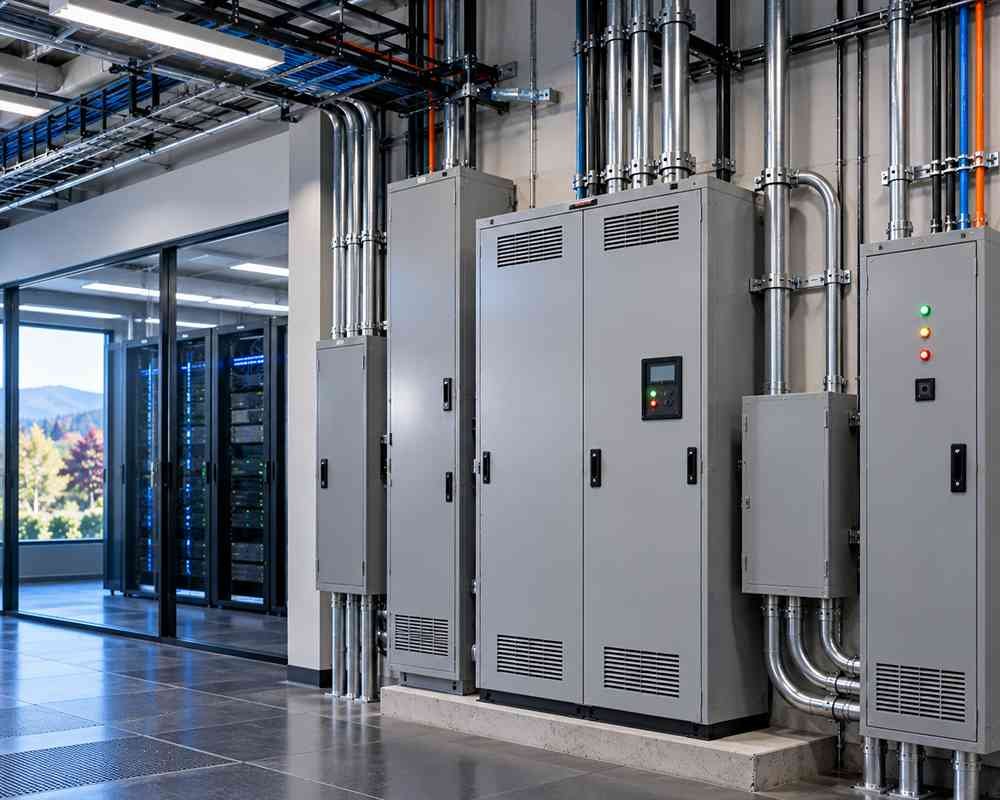
Commercial Automatic Transfer Switch Installation
What Is Commercial Automatic Transfer Switch Installation?
Commercial automatic transfer switch installation covers sizing, wiring, and configuring the switching equipment that connects a commercial generator system to your facility's electrical service. At commercial scale, this is genuinely a code-compliance topic as much as an electrical one — NFPA 110, the Standard for Emergency and Standby Power Systems, sets real requirements around switch listing, load sequencing, and ongoing testing that simply don't apply to a residential installation.
This is different from the sizing and load-shedding content on our residential Automatic Transfer Switch Installation page — at commercial scale, the real questions are about transition type, code compliance, and reliability for facilities that genuinely can't afford unplanned downtime. Bright Right Electric installs commercial automatic transfer switches for businesses across Sonoma County, as a CSLB-licensed electrical contractor (#1156335) based right in Rohnert Park.
Commercial Automatic Transfer Switch Installation
Our Process
A commercial automatic transfer switch installation moves through the same core stages:
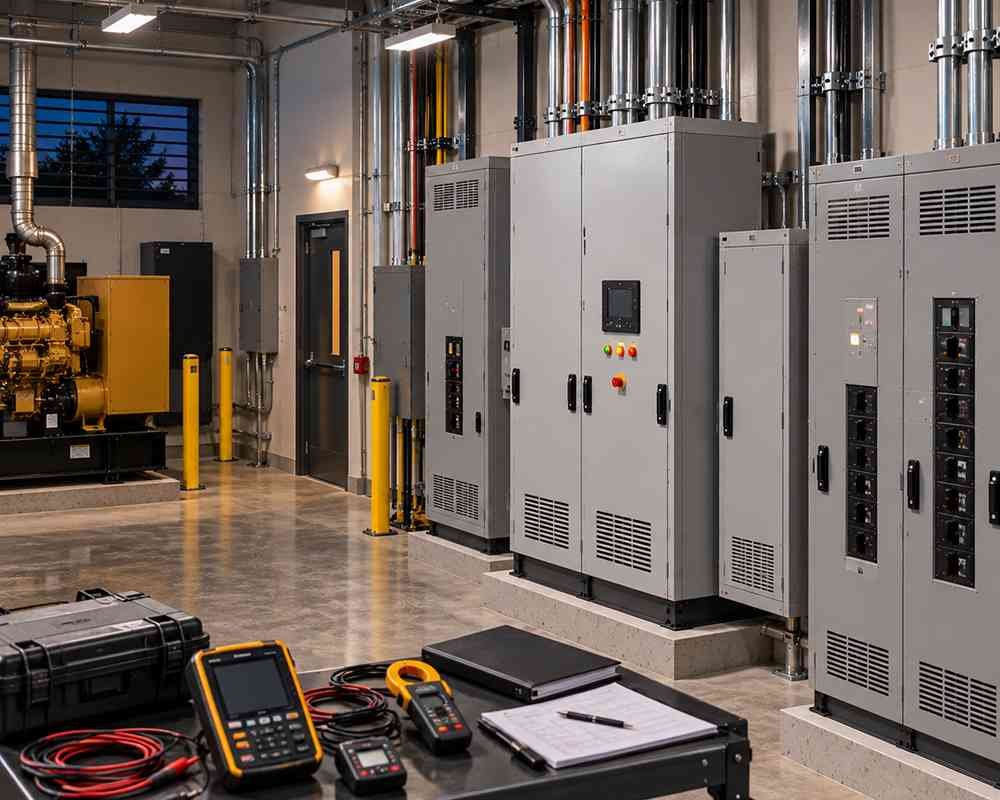
01
Facility Assessment
We evaluate your facility type, load requirements, and whether NFPA 110 applies to your generator system.
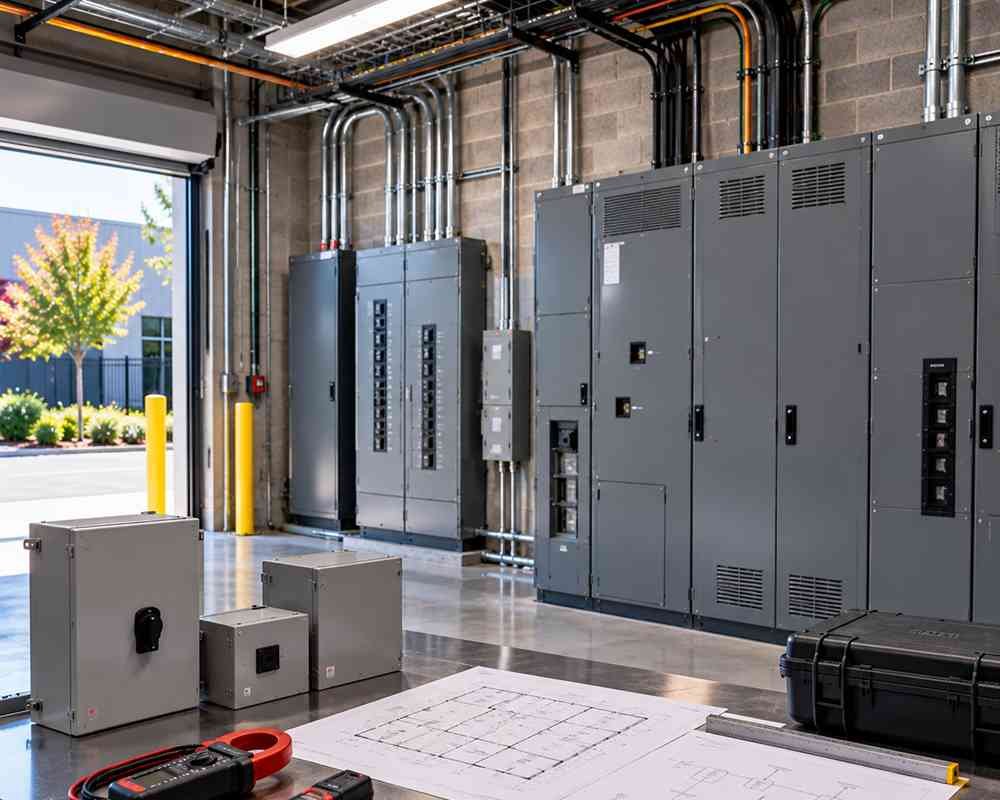
02
Transition Type Selection
We help you choose between open, closed, delayed, or soft-load transition based on your equipment's actual sensitivity to interruption.
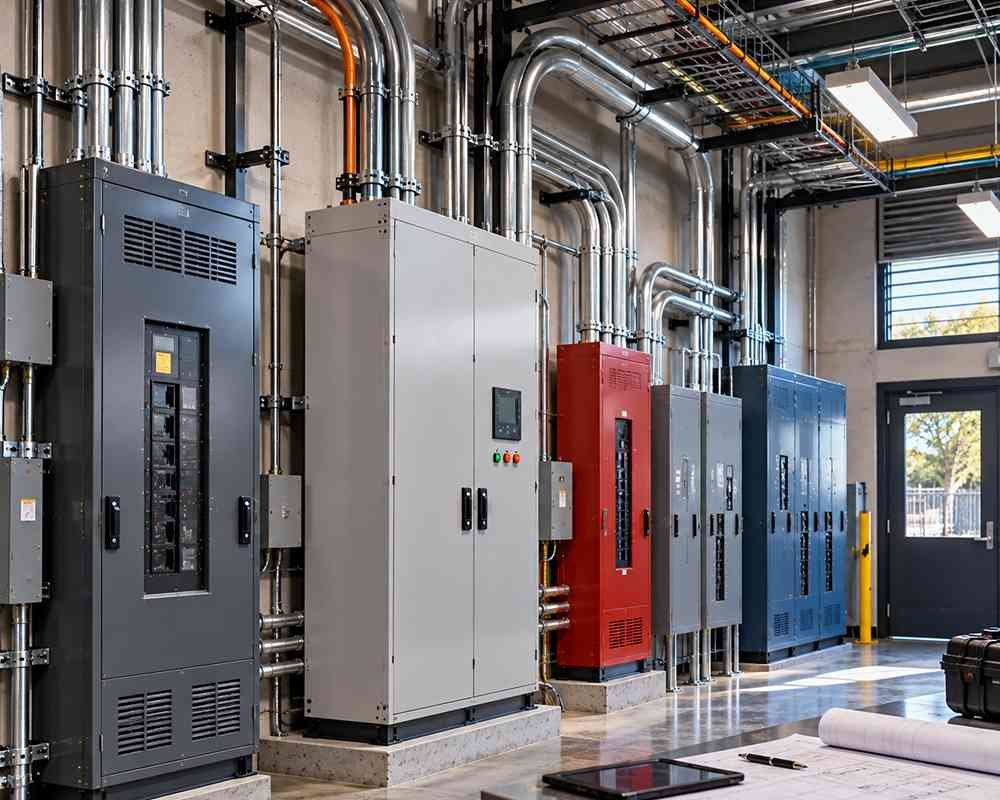
03
Sizing & Code Review
We size the switch to your service and confirm compliance with applicable NEC and NFPA 110 requirements.
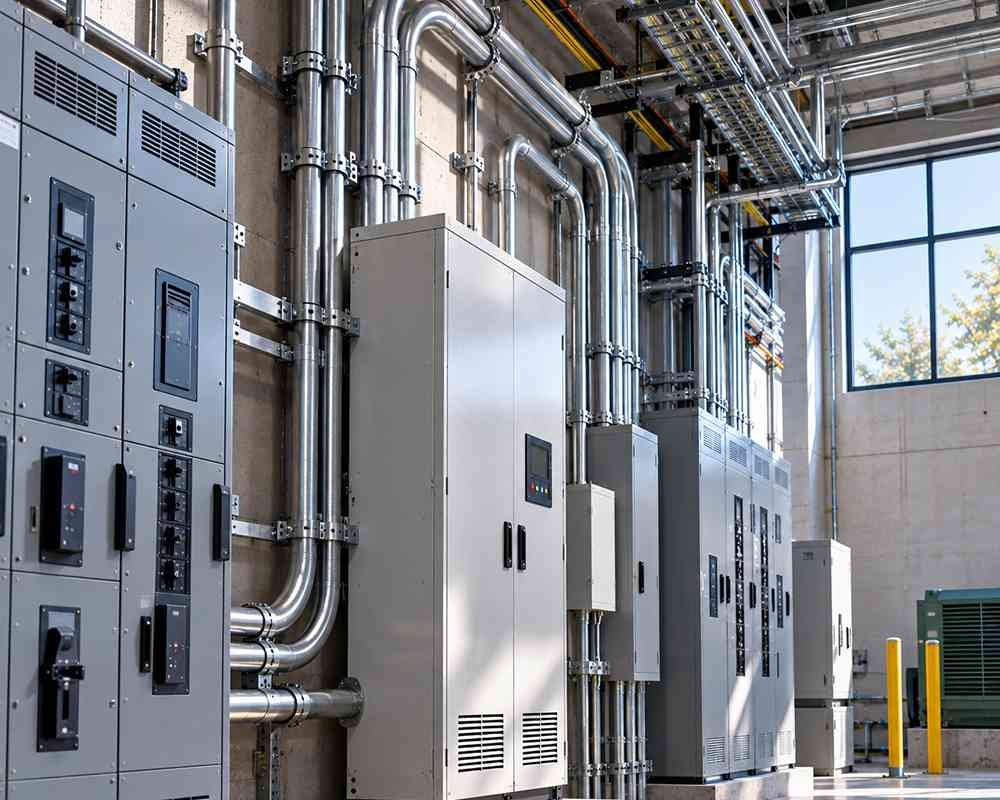
04
Installation
We wire the switch to your panel and generator system according to the correct configuration for your transition type.

05
Commissioning
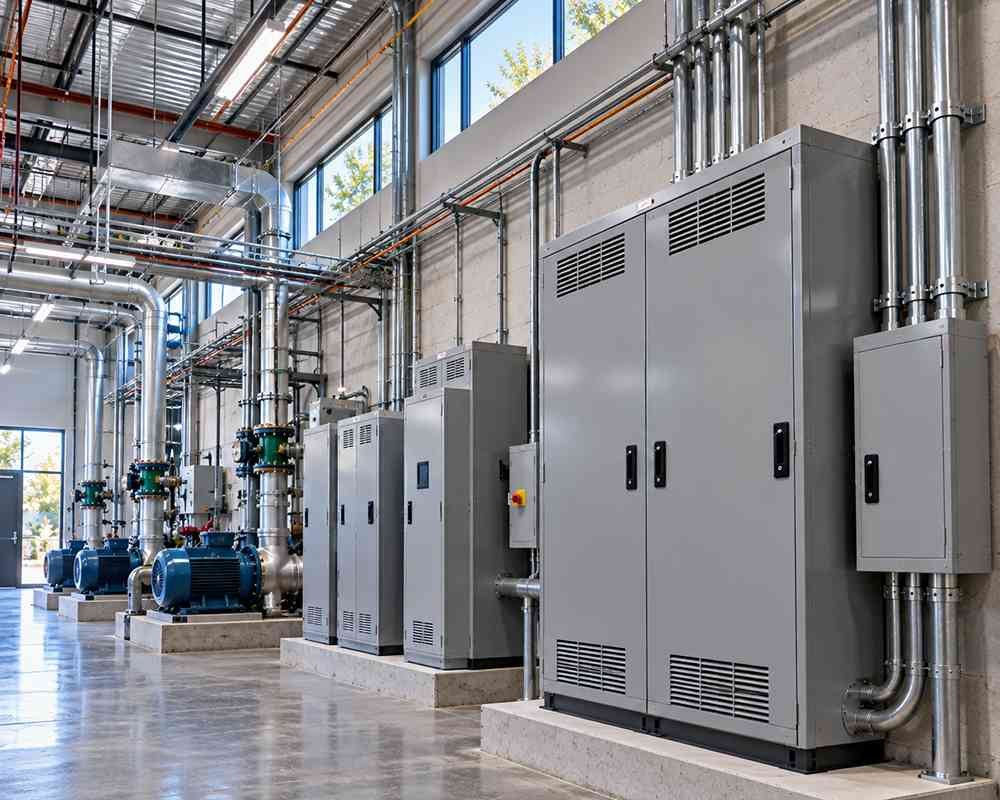
We test the full transfer sequence under load, confirming load-sequencing timing meets code requirements.
06
Testing Protocol Setup
We establish the ongoing monthly testing and annual inspection schedule your system needs.
Commercial Automatic Transfer Switch Installation
How Much Does Commercial ATS Installation Cost?
Cost depends heavily on system size and transition type. Commercial systems in the 400–1,000 amp range commonly run $5,000–25,000 installed, compared to $800–2,500 for smaller residential 100–200A units — closed-transition and healthcare-grade systems generally run toward the higher end given their additional equipment and testing requirements.
Commercial Automatic Transfer Switch Installation
Understanding NFPA 110
This is worth knowing before you scope a project: NFPA 110, the Standard for Emergency and Standby Power Systems, governs the design, installation, and ongoing testing of commercial emergency and standby power systems, working alongside the National Electrical Code. It sets real requirements around switch listing, load sequencing, and — critically — mechanical interlocking to prevent the primary power supply and emergency source from ever being inadvertently interconnected.
The Four Real Transition Types
Not every facility needs the same switching behavior — here's an honest breakdown:
| Type | Sequence | Best For | Notes |
|---|---|---|---|
| Open | Break-before-make | General commercial, light industrial | Standard, cost-effective |
| Closed | Make-before-break | Hospitals, data centers | Requires synchronization |
| Delayed | Timed center-off | Inductive/motor loads | Common for UPS, VFD equipment |
| Soft-load | Synchronized ramp | Sensitive process equipment | Gradual load transfer |
Commercial Automatic Transfer Switch Installation
Closed Transition: When It Actually Matters
This isn't a universal upgrade everyone should get — closed transition is specifically worth considering for facilities that genuinely can't tolerate even a momentary power gap: life support or surgical equipment, and mission-critical mechanical systems where a brief interruption could cause real disruption. It requires the generator and utility to synchronize in voltage, frequency, and phase angle, along with a synch check and backfeed protection. For general commercial and light industrial use, standard open transition remains the practical, cost-effective choice.
Real Load-Sequencing Timing
Under NFPA 110, this isn't a vague target — it's specific: emergency loads must switch to the emergency bus within 10 seconds of sensing a loss of power, with legally required standby loads following within 60 seconds. Overall transfer typically happens within 5–10 seconds of the initial outage detection.
The Ongoing Testing Obligation
This is genuinely easy to overlook once installation is complete: NFPA 110 mandates monthly testing and annual inspection of the complete emergency power system, including the transfer switch itself. This isn't a one-time installation checkbox — it's an ongoing compliance requirement, and skipping it is exactly the kind of gap that shows up at the worst possible moment, during an actual outage.
Bypass Isolation for Healthcare Facilities
If your facility is a Level 1 (life-safety) system under NFPA 110 — common in healthcare settings — this matters specifically: these systems must use listed equipment and require a bypass isolation switch, allowing maintenance or testing to occur without interrupting power to critical loads.
Commercial Automatic Transfer Switch Installation
What's Included
Commercial automatic transfer switch installation often works alongside these related services:
Generator Installation
Generator installation covers the broader project this switch is typically part of, including real pricing and the local PSPS context that makes backup power a genuine business need in Sonoma County.
Automatic Transfer Switch Installation (Residential)
Automatic transfer switch installation covers the residential sizing and load-shedding fundamentals this page builds on for smaller-scale properties.
Whole House Surge Protection
Whole house surge protection covers a genuinely practical add-on while your panel is already open for a transfer switch connection.
Service Entrance Upgrades
Service entrance upgrades cover increasing your facility's overall electrical capacity, relevant if your current service doesn't match what a commercial transfer switch and generator setup actually needs.
Commercial Standby Power
Backup power systems for businesses, scaled from smaller commercial installations up to larger facilities with higher continuous power needs.
Generator Sizing & Load Calculation
Determining the right generator capacity to pair with your transfer switch, based on your facility's real electrical load and coverage goals.
Commercial Automatic Transfer Switch Installation
Why Sonoma County Chooses Bright Right Electric
We know NFPA 110, not just general electrical code.
Load sequencing, listed-equipment requirements, ongoing testing obligations — we plan to the actual standard your facility needs to meet.
We're honest about when closed transition actually matters.
We won't upsell you on equipment your facility doesn't genuinely need — and we'll be direct when it does.
We help you stay compliant long after installation.
The monthly testing and annual inspection requirement doesn't end at commissioning — we help you build a plan around it.
We're licensed, insured, and available 24/7.
As a CSLB-licensed contractor (#1156335), we schedule commercial work around your business's operating hours whenever possible, and we're reachable at (707) 791-5552 any time your project needs an electrician on-site.
08 ─────── Reviews
What Rohnert Park Customers Are Saying

"This is the most professional company I have ever worked with. I am a difficult person and hard to please (I have really high standards (as a retired science teacher) and I am skeptical of workmen and I'm a perfectionist!). Bright Right is currently working on the 3rd job I have hired them for – everything has gone smoothly, no stress at all!!! They are so friendly and so courteous. Rick and Dustin are an effective team with their two unique personalities – both very upbeat, serious, and kind. They explain everything in detail and answer all my questions (I am hyper-concerned about my property), and they are basically experienced, conscientious electricians you can trust."
— Nora Parker · Google Review
"I recently hired Dustin for some electrical work at my home, and I couldn't be happier with the results. He installed a high-quality bathroom fan, finished installing several outlets around the house, and completed a new electrical panel installation. From start to finish, Dustin was professional, knowledgeable, and clearly takes pride in doing the job right. The new panel installation was the bigger job, and Dustin handled it with real expertise. Everything was organized, labeled, and done to a very high standard, which gave me a lot of confidence in the safety and quality of the work."
— Google Review
"Bright Right did the electrical for our kitchen remodel and we couldn't be happier, we have since then added an EV with them and they were as good as the first time. Highly recommend!"
— Joey Evans · Google Review
"Shout out to Dustin Fildes, the electrician they sent to do the work at my house. You can tell he takes pride in his work. He's a very professional and very friendly. Individual would absolutely recommend Bright Right Electric and specifically Dustin to all my family and friends. Thank you Bright Right"
— Robert Horner, Google Review
Google Business Profile
5.0
Across 27 Google reviews
Commercial Automatic Transfer Switch Installation
Serving Sonoma County Homes & Businesses
Bright Right Electric is based at 1150 Holly Ave in Rohnert Park, and we install accent lighting for homes and businesses throughout Sonoma County — from Rohnert Park and Santa Rosa to Petaluma and the surrounding communities along the Highway 101 corridor. Whatever feature you want highlighted, we bring the right technique to the job.

Questions
Frequently Asked Questions
What is NFPA 110?
NFPA 110 is the Standard for Emergency and Standby Power Systems, governing the design, installation, and ongoing testing requirements for commercial emergency and standby power systems, including automatic transfer switches.
Open transition vs. closed transition transfer switch — what's the difference?
Open transition uses a break-before-make sequence, briefly interrupting power — the standard choice for most commercial applications. Closed transition momentarily parallels the generator with the utility for zero interruption, recommended for facilities like hospitals or data centers.
How fast does an automatic transfer switch respond to a power outage?
Typically within 5 to 10 seconds for the initial transfer. Under NFPA 110, emergency loads must switch to the emergency bus within 10 seconds, with legally required standby loads following within 60 seconds.
Do commercial generators need to be tested regularly?
Yes. NFPA 110 mandates monthly testing and annual inspection of the complete emergency power system, including the transfer switch, as an ongoing compliance requirement.
What is a bypass isolation switch?
A bypass isolation switch allows maintenance or testing to occur without interrupting power to critical loads — required for Level 1 (life-safety) systems under NFPA 110, common in healthcare facilities.
How much does a commercial automatic transfer switch cost?
Commercial systems in the 400-1,000A range commonly run $5,000 to $25,000 installed, compared to $800 to $2,500 for smaller 100-200A residential units.
Does a hospital need a closed transition transfer switch?
It's worth considering, though not universally required — closed transition is specifically recommended for facilities running equipment that can't tolerate even a momentary interruption, such as life support or surgical equipment.
What is delayed transition switching used for?
Delayed transition uses a timed center-off or time delay to neutral, and is commonly recommended for inductive or motor loads, including facilities with UPS or VFD equipment.
What codes govern commercial emergency power systems?
NFPA 110 is the primary standard, working alongside the National Electrical Code (including Article 702) and UL 1008, which governs the safety listing of transfer switch equipment itself.
What is the difference between emergency power and legally required standby power?
Emergency loads are first priority and must switch to the emergency bus within 10 seconds of a power loss under NFPA 110. Legally required standby loads follow within 60 seconds, reflecting a slightly lower priority tier in the load-sequencing requirements.
Get in touch
Ready to Talk Through Your Project?
Call (707) 791-5552 or fill out the form below and we'll follow up with real design guidance for whatever you want to highlight.
Phone
(707) 791-5552
(tap to call)
Address
1150 Holly Ave, Rohnert Park, CA 94928
Hours
7am - 5pm & 24 hour emergency services available.
15 ─────── Full service detail
Electrical Panel Upgrades in Rohnert Park
Replacing an undersized or obsolete panel is the most common job we perform in Rohnert Park, and it's the one that unlocks everything else. If your home still runs original 100-amp service, a Federal Pacific Stab-Lok, or a Zinsco panel, you're working with equipment engineered for a much smaller electrical load — and, in the case of those two brands, with a documented history of breakers that fail to trip. Upgrading to 200-amp service makes EV charging, battery backup, heat pumps, and modern appliance loads possible without constantly tripping breakers. We size the new service to what your household actually needs, pull the permit, coordinate the PG&E disconnect and reconnect, and meet the inspector for final sign-off.
EV Charger Installation in Sonoma County
Bright Right installs Level 2 home charging sized to your vehicle and, just as importantly, to your panel's actual available capacity. We run the dedicated 240-volt circuit, mount and commission the charger, and handle the permit — installing Tesla Wall Connectors, universal J1772 and NACS units, and hardwired or plug-in setups across Rohnert Park, Petaluma, and Santa Rosa. The detail most homeowners don't hear until it's too late is that many Sonoma County panels can't support a Level 2 charger without a service upgrade first, so we run a load calculation before you buy equipment, not after. We can also pre-wire a second circuit if a second EV is anywhere in your future.
Standby Generators & Backup Power
Public safety power shutoffs are a fact of life in Sonoma County, and so are winter storms that take lines down in the hills. We install whole-house standby generators with automatic transfer switches that pick up the house within seconds of an outage, wire inlets and manual transfer switches for portable generators, and add whole-house surge protection so your equipment isn't damaged when the utility comes back online. We'll also tell you honestly which tier makes sense — not every home in Cotati or Penngrove needs a whole-house unit when a critical-loads panel that keeps the refrigerator, well pump, internet, and a few circuits alive costs a fraction as much.
Solar & Battery Systems
We handle new photovoltaic installation, battery storage, system additions, and remove-and-replace work when a roof needs attention or a system has failed — plus service on existing arrays that aren't producing what they should. If you inherited a solar system with the house and nobody can tell you how it's wired or whether it's still under warranty, we can assess it and give you a clear picture. Battery storage in particular has changed the math for Sonoma County homeowners: between shifting utility rate structures under NEM 3.0 and the frequency of outages, a battery paired with existing solar is often a better investment than adding more panels.
Interior & Exterior Lighting
Recessed and can lighting, full LED retrofits, under-cabinet lighting, dimmer and smart-switch installation, fixture and chandelier hanging, landscape lighting, and security and motion-sensor lighting for homes across Rohnert Park and the University District. On the commercial side we handle lighting retrofits for offices, retail spaces, and warehouses along the Commerce Boulevard corridor, including the fixture and control changes that come with California Title 24 compliance. Lighting is one of the few electrical upgrades where the difference is immediately visible, and it's frequently the cheapest way to make a dated room feel finished.
Electrical Troubleshooting & Repair
Breakers that trip for no obvious reason, circuits that go dead, lights that flicker when the dryer starts, outlets that no longer hold a plug, GFCIs that won't reset, a faint burning smell you can't locate. These are the calls where experience shows. We trace a fault to its real source instead of swapping parts and billing for guesses, which is why our repairs hold and why we get called in behind other contractors who couldn't find the problem. In older Sonoma County homes the cause is often a failing backstab connection, a corroded neutral, a rodent-damaged run in a crawlspace, or a decades-old junction box buried behind drywall.
Custom Homes & New Construction
Full electrical for ground-up residential builds, major remodels, and additions throughout Sonoma, Marin, and Napa County — load calculations and plan review, service and meter setup, rough-in, trim, and final inspection. We work with general contractors, designers, and owner-builders, and we're comfortable on high-end custom projects near Sonoma State University where the lighting design, low-voltage layout, and smart controls all have to be coordinated before a single wire goes in. Getting the details right at rough-in is what keeps a home safe and functional for the next forty years — and it's far cheaper than fixing it after the drywall is up.
Commercial Electrical & Tenant Improvement
Service upgrades, panel and subpanel work, dedicated circuits for equipment, lighting retrofits, EV charging for employee and customer parking, and full tenant-improvement electrical for offices, retail, restaurants, and light industrial space along Redwood Drive and beyond. We understand a commercial job runs on someone else's schedule, so we work around business hours when the scope requires it. From a single dedicated circuit to a complete build-out, you get one licensed contractor coordinating permits, PG&E, and inspection — with clear pricing and a clean, code-compliant result.