
Commercial Flood Light Installation in Rohnert Park & Sonoma County
Real footcandle standards and honest liability guidance — not just "bright" — from a licensed local electrical contractor.
Why Sonoma County Businesses Call Bright Right First
- We design to real IES RP-20 footcandle standards — not just "as bright as possible."
- We help you understand the liability side of parking lot lighting, not just the fixture.
- Licensed, insured, and available 24/7 — call (707) 791-5552 any time your project needs an electrician on-site.
★★★★★
5.0 · 27 Google reviews
20+ years
in the trade
CSLB #1156335
licensed · bonded · insured
Sonoma County
owned & operated
Commercial Flood Light Installation
Why Sonoma County Chooses Bright Right
- Local, family-owned electrical contractor based right in Rohnert Park — not a call center routing you to a subcontractor.
- Straightforward answers on standards, coverage, and cost, explained before you sign anything.
- CSLB-licensed (#1156335) and available around the clock for anything that comes up along the way.
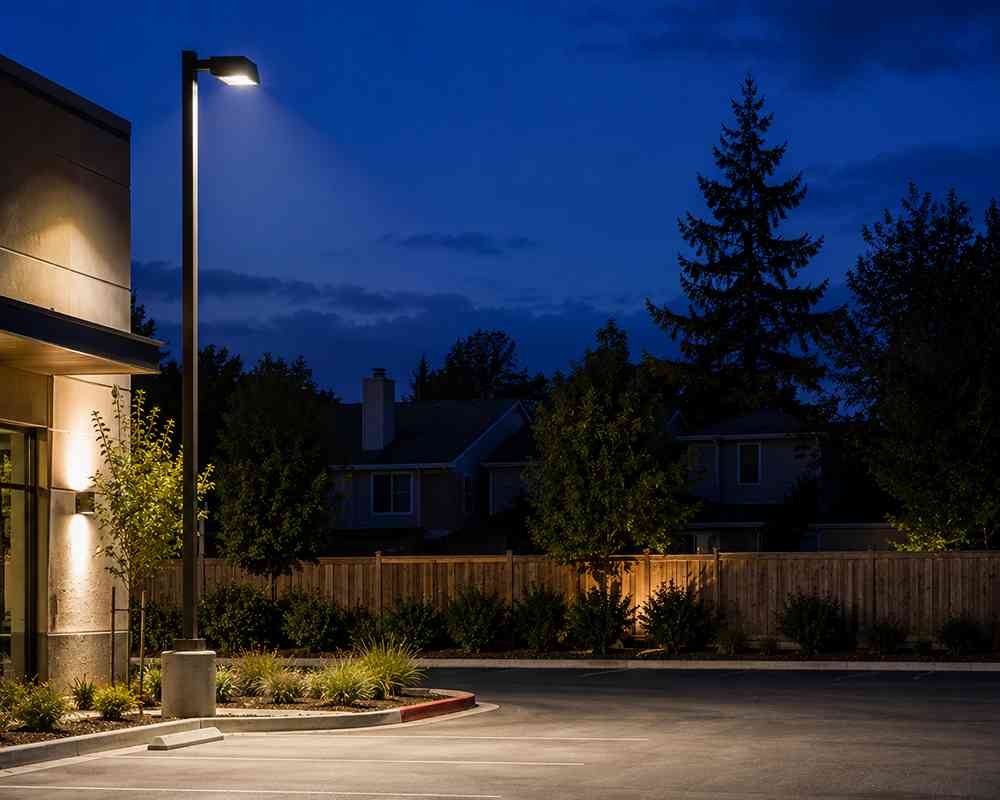
Commercial Flood Light Installation
What Is Commercial Flood Light Installation?
Commercial flood light installation covers designing and installing high-lumen, wide or focused-beam exterior fixtures for parking lots, building perimeters, loading docks, and other business property areas. Unlike a residential flood light, commercial exterior lighting is typically evaluated against a real, named industry standard: the Illuminating Engineering Society's IES RP-20, which sets recommended footcandle levels — a measure of light intensity at ground level — for different area types across a commercial property.
Getting this right matters for more than appearance — it's a real safety and liability consideration for property owners. Bright Right Electric installs commercial flood lighting for businesses across Sonoma County, as a CSLB-licensed electrical contractor (#1156335) based right in Rohnert Park.
Commercial Flood Light Installation
Our Process
A commercial flood light project moves through the same core stages:
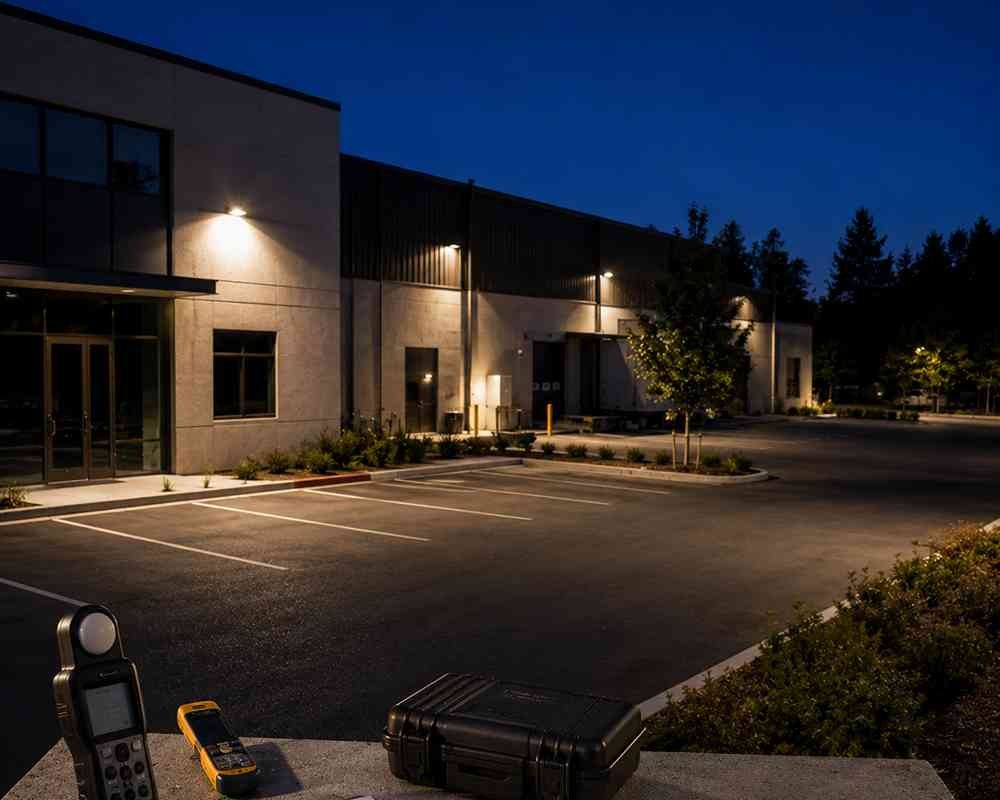
01
Site Assessment
We evaluate your property's current lighting, identifying dark spots, uneven coverage, and areas that may not meet recommended footcandle levels.
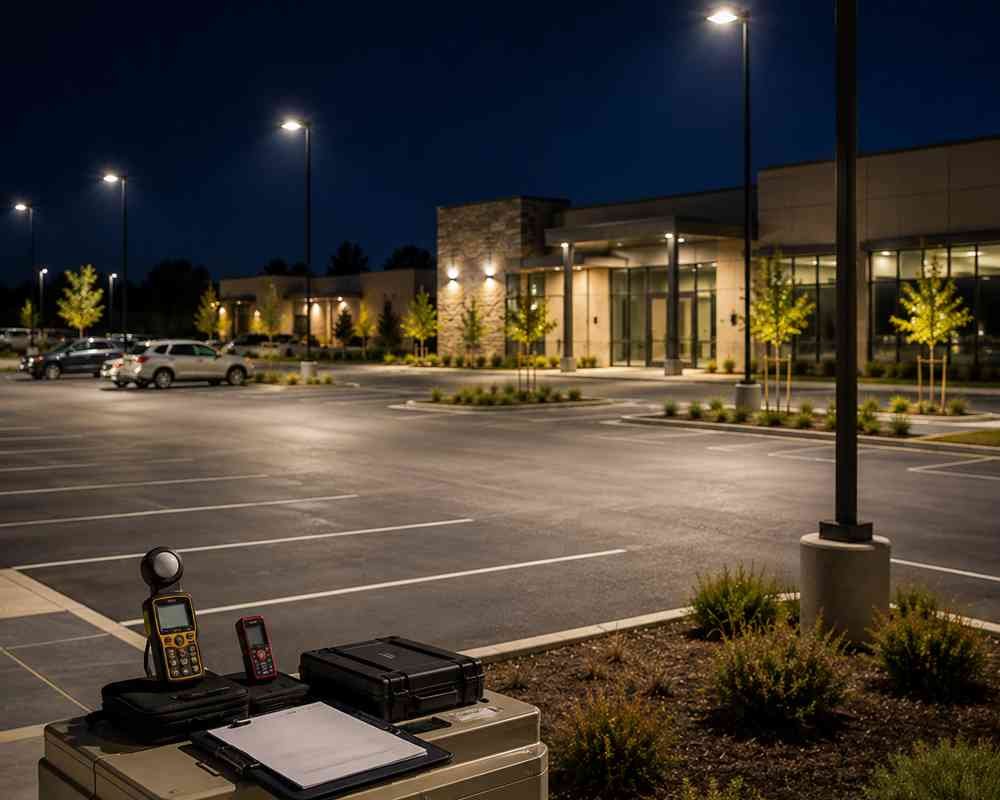
02
Fixture & Pole Planning
We select fixture output, beam optics, and mounting height based on your property's actual layout and traffic patterns.
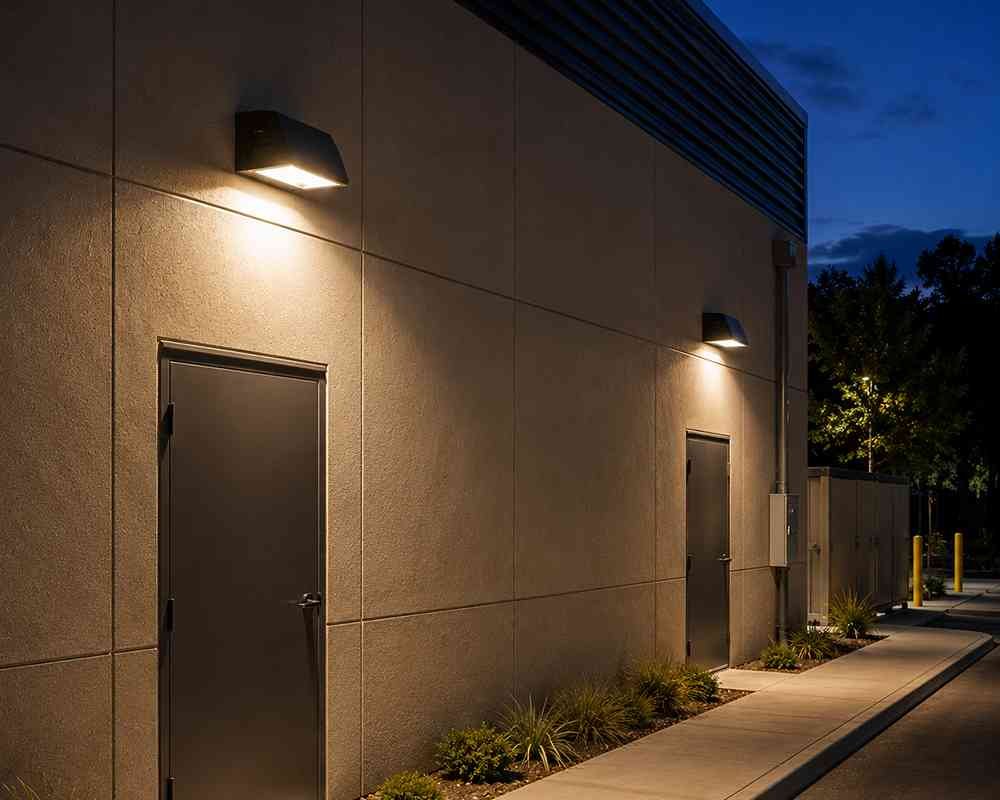
03
Circuit & Wiring Plan
We plan the outdoor circuits and wiring needed to reach each fixture location safely.

04
Permitting
A licensed electrical contractor pulls the required permit before installation begins
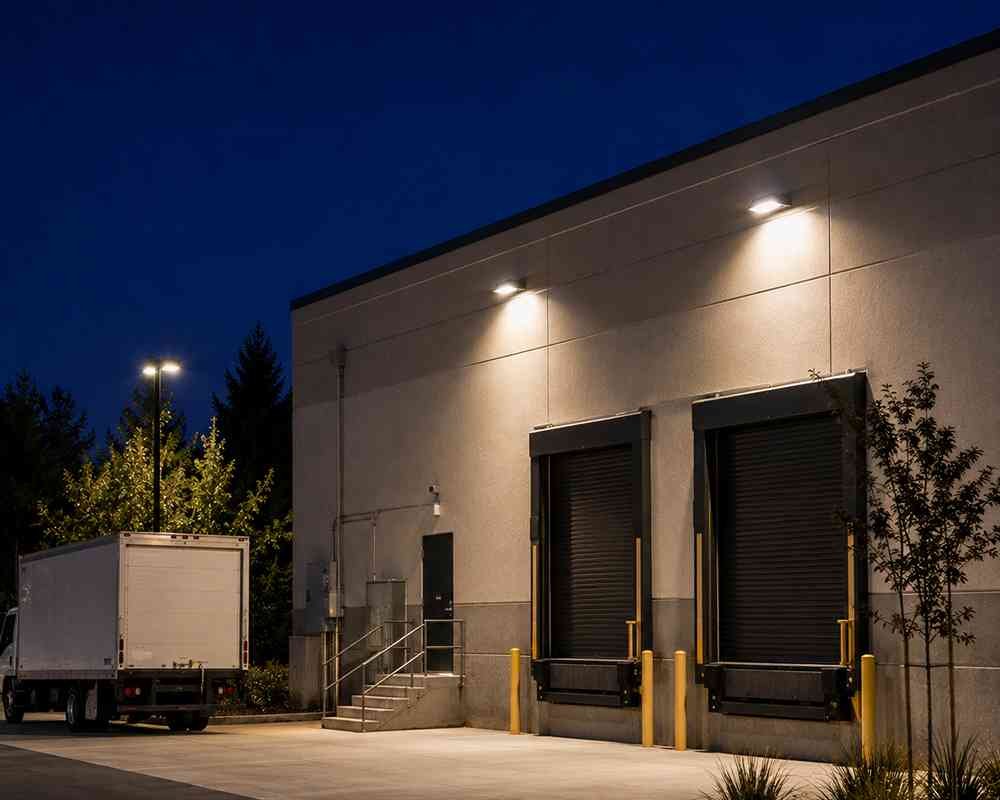
05
Installation & Aiming
We install and aim each fixture for real, even coverage across the intended area
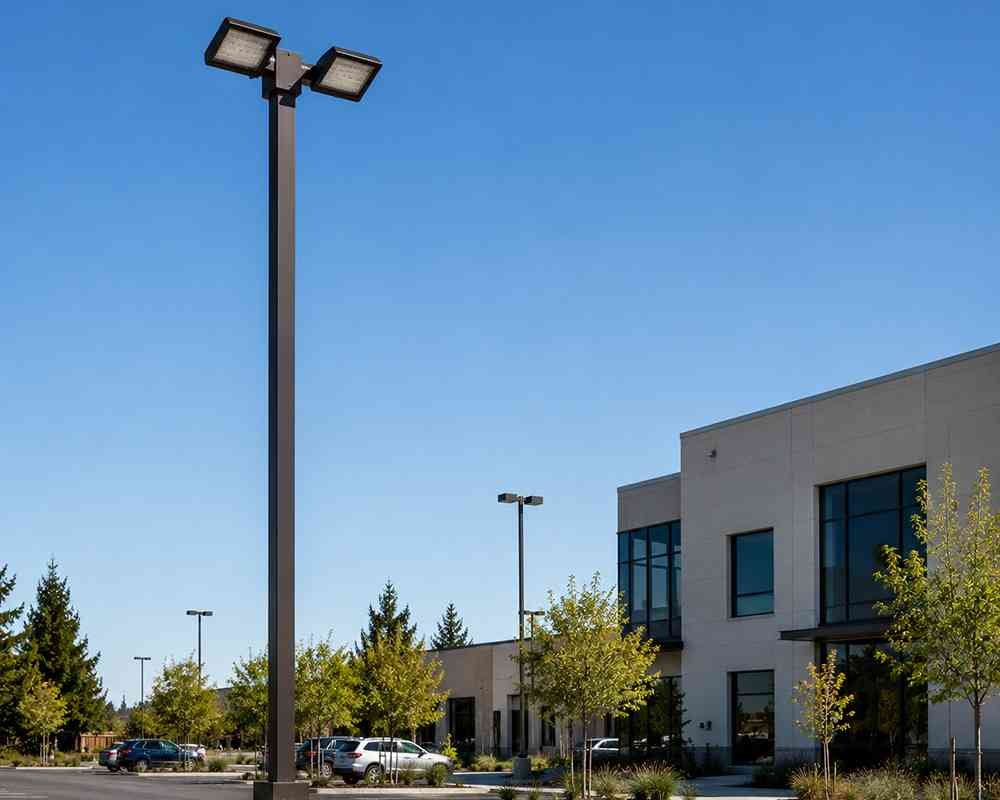
06
Testing & Documentation
We test the completed system after dark and document the work for your records.
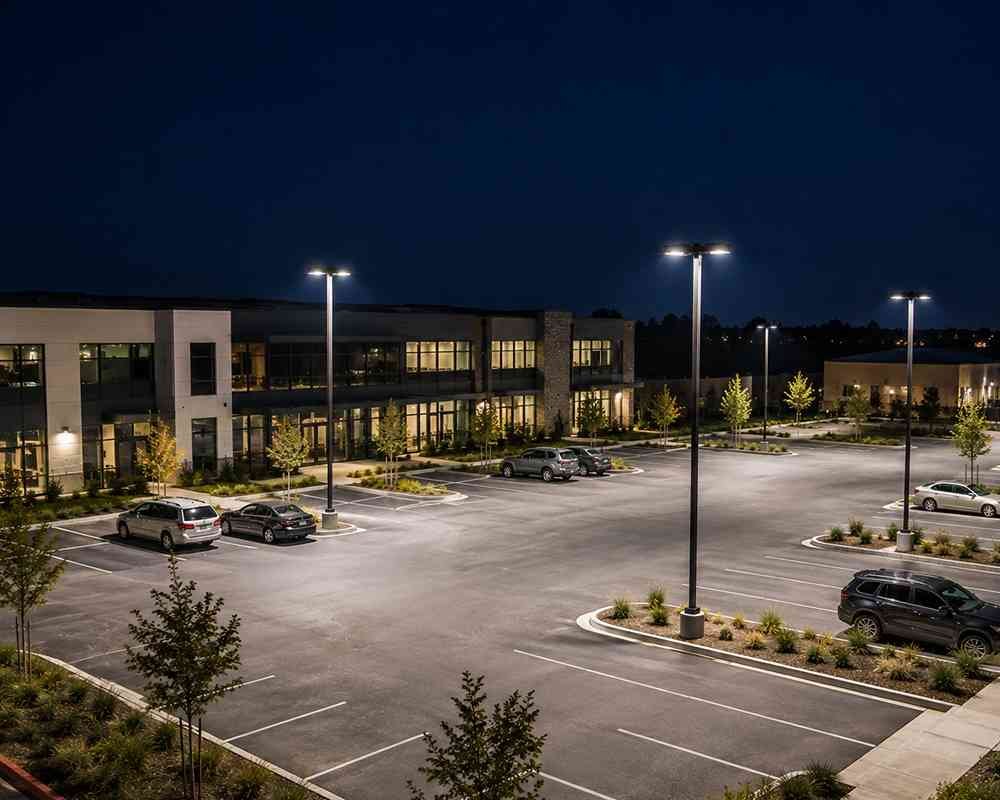
Commercial Flood Light Installation
How Much Does Commercial Flood Light Installation Cost?
Cost depends on the number of fixtures, mounting type (wall-pack vs. pole-mounted), pole height, and whether new circuits need to be run to reach each location. A single wall-pack fixture on existing wiring is the most affordable scenario; a multi-fixture, pole-mounted parking lot project costs significantly more, reflecting the real infrastructure involved.
Commercial Flood Light Installation
IES RP-20: The Real Standard Behind Commercial Lighting
This is worth knowing before you evaluate any lighting proposal: IES RP-20 is the standard reference published by the Illuminating Engineering Society for parking facility lighting, used by architects, engineers, and code officials. It sets recommended footcandle levels — a measure of light intensity at ground level — for different area types on a commercial property:
| Area Type | Recommended Footcandles | Notes |
|---|---|---|
| General / low-traffic areas | 0.5–1.0 fc | Open parking areas, perimeter zones |
| Pedestrian / high-traffic areas | 2.0–3.0 fc | Walkways, drop-off zones |
| Entrances, exits, intersections | 3.0–5.0 fc | Highest-visibility areas for safety |
*Footcandle levels can vary by property type and local jurisdiction — these figures reflect commonly cited IES RP-20 guidance.
The Liability Case for Getting This Right
This is a genuine business consideration, not just a compliance checkbox: inadequate lighting is a documented contributing factor in parking facility liability claims, from slip-and-fall incidents to security-related events. Meeting recognized footcandle standards for your specific property type is a concrete, practical step toward addressing that exposure — though it's worth being clear that proper lighting reduces risk, it doesn't eliminate all liability on its own.
Parking Structures: A Separate Compliance Requirement
If your property includes a covered parking garage or structure, there's a second real code to know about: NFPA 101, the Life Safety Code, requires a minimum of 1 footcandle of illumination along emergency exit pathways during power outages. This is a distinct compliance requirement from IES RP-20's general parking lot design guidance, and applies specifically to emergency egress lighting in covered structures.
It's Not Just Brightness: Understanding Uniformity
A property can technically meet a minimum footcandle number and still have a real lighting problem: uniformity ratio measures the contrast between the brightest and darkest points across a lit area. A lot with a few very bright fixtures and large dark gaps between them can hit an average footcandle target while still creating harsh visibility problems and dark pockets — which is often the real cause of a parking lot that "feels" poorly lit even with adequate total light output. Even coverage matters as much as raw brightness.
The Over-Lighting Risk: More Isn't Always Better
It's worth being honest about the other side of this: over-lighting a property wastes energy and can create real regulatory issues — light trespass onto neighboring properties, or conflicts with dark sky ordinances in some jurisdictions. The goal isn't the maximum possible brightness; it's meeting the real standard for your property's specific use, evenly and efficiently.
Is It Worth Upgrading Old Metal Halide Fixtures?
Often, yes. Aging metal halide fixtures — common on older commercial properties — tend to produce uneven brightness and increasing glare as they age, along with higher energy and maintenance costs than modern LED alternatives. An LED retrofit commonly delivers better, more consistent light quality along with lower ongoing operating costs.
Commercial Flood Light Installation
What's Included
Commercial flood light installation often works alongside these related services, each with its own dedicated page for more detail:
Security Lighting (Commercial)
Security lighting covers the broader deterrence and visibility strategy that commercial flood lights are often part of — the resource to compare if you're planning a full property security lighting plan.
Motion Sensor Lighting (Commercial)
Motion sensor lighting covers the sensor technology and control side of automatic commercial lighting, which can be paired with flood lights for after-hours areas.
Outdoor Lighting and Power
Outdoor lighting and power covers the weatherproof circuits and electrical infrastructure behind any exterior fixture, including commercial flood lights.
LED Lighting Retrofits
LED lighting retrofits cover converting older metal halide or incandescent commercial fixtures to energy-efficient LED, often without a full infrastructure rebuild.
Lighting Repair (Commercial)
Lighting repair covers diagnosing and fixing a commercial flood light that's flickering, not activating, or has stopped working, minimizing downtime on your property's lighting.
Commercial Lighting Installation
Commercial lighting installation covers our full range of business lighting services, for properties planning flood lights as part of a broader lighting project.
Commercial Flood Light Installation
Why Businesses Choose Bright Right Electric
We design to real standards, not guesswork.
IES RP-20's footcandle guidance gives us a real target to design against — not just "make it bright."
We understand the liability stakes.
We treat commercial exterior lighting as the real risk-management consideration it is, not just an aesthetic upgrade.
We won't oversell you on unnecessary brightness.
Over-lighting wastes your money and can create its own regulatory headaches — we design to the actual standard your property needs.
We're licensed, insured, and available 24/7.
As a CSLB-licensed contractor (#1156335), we schedule commercial work around your business's operating hours whenever possible, and we're reachable at (707) 791-5552 any time your project needs an electrician on-site.
08 ─────── Reviews
What Rohnert Park Customers Are Saying

"This is the most professional company I have ever worked with. I am a difficult person and hard to please (I have really high standards (as a retired science teacher) and I am skeptical of workmen and I'm a perfectionist!). Bright Right is currently working on the 3rd job I have hired them for – everything has gone smoothly, no stress at all!!! They are so friendly and so courteous. Rick and Dustin are an effective team with their two unique personalities – both very upbeat, serious, and kind. They explain everything in detail and answer all my questions (I am hyper-concerned about my property), and they are basically experienced, conscientious electricians you can trust."
— Nora Parker · Google Review
"I recently hired Dustin for some electrical work at my home, and I couldn't be happier with the results. He installed a high-quality bathroom fan, finished installing several outlets around the house, and completed a new electrical panel installation. From start to finish, Dustin was professional, knowledgeable, and clearly takes pride in doing the job right. The new panel installation was the bigger job, and Dustin handled it with real expertise. Everything was organized, labeled, and done to a very high standard, which gave me a lot of confidence in the safety and quality of the work."
— Google Review
"Bright Right did the electrical for our kitchen remodel and we couldn't be happier, we have since then added an EV with them and they were as good as the first time. Highly recommend!"
— Joey Evans · Google Review
"Shout out to Dustin Fildes, the electrician they sent to do the work at my house. You can tell he takes pride in his work. He's a very professional and very friendly. Individual would absolutely recommend Bright Right Electric and specifically Dustin to all my family and friends. Thank you Bright Right"
— Robert Horner, Google Review
Google Business Profile
5.0
Across 27 Google reviews
Commercial Flood Light Installation
Serving Commercial Properties Throughout Sonoma County
Bright Right Electric is based at 1150 Holly Ave in Rohnert Park, and we install commercial flood lighting for businesses throughout Sonoma County — from retail centers and office campuses along the Highway 101 corridor to parking structures and industrial properties across the region. Whatever your property type, we design to real standards, not just maximum brightness.

Questions
Frequently Asked Questions
What are the footcandle requirements for a commercial parking lot?
Requirements vary by area type, but commonly cited IES RP-20 targets are roughly 0.5-1.0 footcandles for general low-traffic areas, 2.0-3.0 footcandles for pedestrian and high-traffic areas, and 3.0-5.0 footcandles for entrances, exits, and intersections.
What is IES RP-20?
IES RP-20 is a lighting design standard published by the Illuminating Engineering Society specifically for parking facilities, commonly used by architects, engineers, and code officials to determine footcandle levels, uniformity, and fixture placement.
How much does commercial flood light installation cost?
It depends on the number of fixtures, mounting type, pole height, and whether new circuits are needed. A single wall-pack fixture on existing wiring costs less than a multi-fixture, pole-mounted parking lot project.
What lighting is required for parking garage emergency exits?
NFPA 101, the Life Safety Code, requires a minimum of 1 footcandle of illumination along emergency exit pathways in parking structures, a distinct compliance requirement from general IES RP-20 parking lot design guidance.
Can poor parking lot lighting increase business liability?
Yes, this is a real concern. Inadequate lighting is a documented contributing factor in parking facility liability claims, from slip-and-fall incidents to security events. Meeting recognized footcandle standards is a concrete step toward addressing that exposure.
What is a uniformity ratio in parking lot lighting?
Uniformity ratio measures the contrast between the brightest and darkest points in a lit area. A property can meet a minimum footcandle average while still having a poor uniformity ratio that creates real dark spots and visibility problems.
How high should commercial parking lot light poles be?
Pole height commonly ranges from 20-30 feet in urban zones, though municipalities may cap heights around 25 feet in areas adjacent to residential properties — the right height depends on your property's layout and local requirements.
Is it worth upgrading old metal halide fixtures to LED?
Often, yes. Aging metal halide fixtures tend to produce uneven brightness and increasing glare over time, along with higher energy and maintenance costs than modern LED alternatives, which commonly deliver better, more consistent light quality.
What are dark sky ordinances and do they affect commercial lighting?
Dark sky ordinances are local regulations aimed at reducing light pollution and light trespass onto neighboring properties. Some jurisdictions apply these to commercial exterior lighting, which is a real consideration when planning fixture brightness and placement, not just meeting minimum footcandle targets.
Wall pack vs. pole-mounted flood lighting — which is better for a business?
It depends on the area. Wall packs work well for building perimeters and shorter-distance coverage, while pole-mounted fixtures are typically needed for open parking lots and larger areas requiring light to travel farther and cover more ground evenly.
Get in touch
Ready to Talk Through Your Project?
Call (707) 791-5552 or fill out the form below and we'll follow up with a straight answer on standards, coverage, and cost.
Phone
(707) 791-5552
(tap to call)
Address
1150 Holly Ave, Rohnert Park, CA 94928
Hours
7am - 5pm & 24 hour emergency services available.
15 ─────── Full service detail
Electrical Panel Upgrades in Rohnert Park
Replacing an undersized or obsolete panel is the most common job we perform in Rohnert Park, and it's the one that unlocks everything else. If your home still runs original 100-amp service, a Federal Pacific Stab-Lok, or a Zinsco panel, you're working with equipment engineered for a much smaller electrical load — and, in the case of those two brands, with a documented history of breakers that fail to trip. Upgrading to 200-amp service makes EV charging, battery backup, heat pumps, and modern appliance loads possible without constantly tripping breakers. We size the new service to what your household actually needs, pull the permit, coordinate the PG&E disconnect and reconnect, and meet the inspector for final sign-off.
EV Charger Installation in Sonoma County
Bright Right installs Level 2 home charging sized to your vehicle and, just as importantly, to your panel's actual available capacity. We run the dedicated 240-volt circuit, mount and commission the charger, and handle the permit — installing Tesla Wall Connectors, universal J1772 and NACS units, and hardwired or plug-in setups across Rohnert Park, Petaluma, and Santa Rosa. The detail most homeowners don't hear until it's too late is that many Sonoma County panels can't support a Level 2 charger without a service upgrade first, so we run a load calculation before you buy equipment, not after. We can also pre-wire a second circuit if a second EV is anywhere in your future.
Standby Generators & Backup Power
Public safety power shutoffs are a fact of life in Sonoma County, and so are winter storms that take lines down in the hills. We install whole-house standby generators with automatic transfer switches that pick up the house within seconds of an outage, wire inlets and manual transfer switches for portable generators, and add whole-house surge protection so your equipment isn't damaged when the utility comes back online. We'll also tell you honestly which tier makes sense — not every home in Cotati or Penngrove needs a whole-house unit when a critical-loads panel that keeps the refrigerator, well pump, internet, and a few circuits alive costs a fraction as much.
Solar & Battery Systems
We handle new photovoltaic installation, battery storage, system additions, and remove-and-replace work when a roof needs attention or a system has failed — plus service on existing arrays that aren't producing what they should. If you inherited a solar system with the house and nobody can tell you how it's wired or whether it's still under warranty, we can assess it and give you a clear picture. Battery storage in particular has changed the math for Sonoma County homeowners: between shifting utility rate structures under NEM 3.0 and the frequency of outages, a battery paired with existing solar is often a better investment than adding more panels.
Interior & Exterior Lighting
Recessed and can lighting, full LED retrofits, under-cabinet lighting, dimmer and smart-switch installation, fixture and chandelier hanging, landscape lighting, and security and motion-sensor lighting for homes across Rohnert Park and the University District. On the commercial side we handle lighting retrofits for offices, retail spaces, and warehouses along the Commerce Boulevard corridor, including the fixture and control changes that come with California Title 24 compliance. Lighting is one of the few electrical upgrades where the difference is immediately visible, and it's frequently the cheapest way to make a dated room feel finished.
Electrical Troubleshooting & Repair
Breakers that trip for no obvious reason, circuits that go dead, lights that flicker when the dryer starts, outlets that no longer hold a plug, GFCIs that won't reset, a faint burning smell you can't locate. These are the calls where experience shows. We trace a fault to its real source instead of swapping parts and billing for guesses, which is why our repairs hold and why we get called in behind other contractors who couldn't find the problem. In older Sonoma County homes the cause is often a failing backstab connection, a corroded neutral, a rodent-damaged run in a crawlspace, or a decades-old junction box buried behind drywall.
Custom Homes & New Construction
Full electrical for ground-up residential builds, major remodels, and additions throughout Sonoma, Marin, and Napa County — load calculations and plan review, service and meter setup, rough-in, trim, and final inspection. We work with general contractors, designers, and owner-builders, and we're comfortable on high-end custom projects near Sonoma State University where the lighting design, low-voltage layout, and smart controls all have to be coordinated before a single wire goes in. Getting the details right at rough-in is what keeps a home safe and functional for the next forty years — and it's far cheaper than fixing it after the drywall is up.
Commercial Electrical & Tenant Improvement
Service upgrades, panel and subpanel work, dedicated circuits for equipment, lighting retrofits, EV charging for employee and customer parking, and full tenant-improvement electrical for offices, retail, restaurants, and light industrial space along Redwood Drive and beyond. We understand a commercial job runs on someone else's schedule, so we work around business hours when the scope requires it. From a single dedicated circuit to a complete build-out, you get one licensed contractor coordinating permits, PG&E, and inspection — with clear pricing and a clean, code-compliant result.